Puppy Corner
Everything you need to know about raising a happy, healthy Golden Retriever puppy.
Welcome to the "Land Shark" Phase
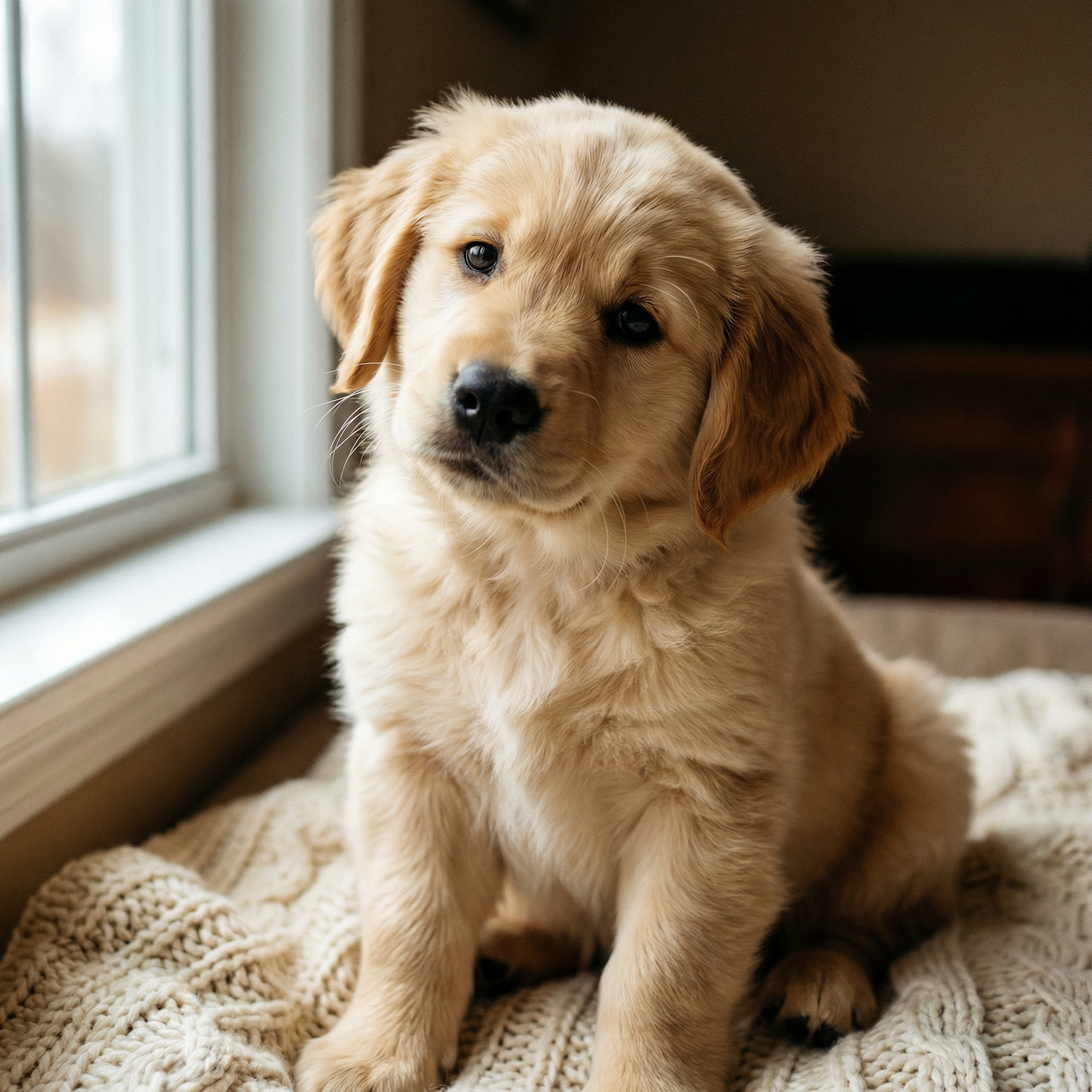
Golden Retriever puppies are bundles of joy, energy, and yes—razor-sharp teeth. The first year is challenging but incredibly rewarding. With proper preparation, patience, and consistency, you'll navigate puppyhood successfully and build a foundation for a lifetime of companionship.
Choosing a Responsible Breeder
Red Flags to Avoid
- Always has puppies available (puppy mill)
- Won't let you visit or meet parents
- No health testing documentation
- Sells puppies before 8 weeks old
- Offers multiple breeds
- Doesn't ask YOU questions
- No contract or health guarantee
- Meets you in parking lot (not home)
Signs of a Good Breeder
- Health tests parents (hips, elbows, eyes, heart)
- Provides pedigree and health clearances
- Welcomes home visits
- Asks about your lifestyle and experience
- Keeps puppies until 8+ weeks
- Offers lifetime support and guidance
- Written contract with health guarantee
- Involved in breed clubs or competitions
Expected Cost
Reputable breeders charge $1,500-$3,500 for pet-quality puppies. Show-quality or champion bloodlines can exceed $4,000. This price reflects health testing, proper care, and breeder expertise. Beware of "bargain" puppies—they often come with expensive health problems.
Consider adoption! Many Golden Retriever rescues have puppies and young adults needing homes.
Essential Puppy Supplies
Feeding
- Stainless steel bowls (2)
- Puppy food (breeder's brand)
- Treats for training
- Food storage container
Sleeping & Crating
- Crate (36-42 inch for adult size)
- Crate pad or blanket
- Puppy playpen (optional)
- Dog bed for living areas
Potty Training
- Puppy pads (backup)
- Enzyme cleaner
- Outdoor leash for potty
- Pooper scooper & bags
Walking & Safety
- Collar with ID tag
- 6-foot leash
- Harness (for training)
- Car safety restraint
Toys & Enrichment
- Chew toys (Kongs, nylon bones)
- Plush toys (supervised only)
- Rope toys for tug
- Puzzle toys for mental stimulation
Grooming & Health
- Puppy shampoo
- Slicker brush
- Nail clippers
- Toothbrush & paste
First-Year Cost Estimate
$2,000 - $3,000
Includes supplies, vet visits, vaccinations, spay/neuter, training classes, and food.
Puppy Growth Chart
8 Weeks
Average Weight: 10-15 lbs
Milestones:
Leaving breeder. First vet visit. Start housebreaking and crate training. Socialization critical.
Challenges:
Separation anxiety. Frequent potty breaks (every 1-2 hours). Teething begins.
3 Months
Average Weight: 20-30 lbs
Milestones:
Second vaccine round. Puppy classes start. Learning basic commands. Exploring environment.
Challenges:
Peak teething pain. Biting/mouthing. High energy. Short attention span.
6 Months
Average Weight: 40-50 lbs
Milestones:
Final vaccines. Spay/neuter discussion. Adult teeth coming in. Better bladder control.
Challenges:
Adolescence begins. Testing boundaries. Selective hearing. Increased independence.
9 Months
Average Weight: 50-60 lbs
Milestones:
Near adult height. Hormonal changes. More focus in training. Longer walks possible.
Challenges:
Teenage rebellion phase. May regress in training. High energy needs.
12 Months
Average Weight: 55-70 lbs
Milestones:
Considered adult. Switch to adult food. Still mentally immature. Continued training important.
Challenges:
Still playful and energetic. May not 'settle' until 2-3 years old.
18 Months
Average Weight: 60-75 lbs
Milestones:
Fully grown. Filling out muscle mass. Personality solidified. Training refinement.
Challenges:
Peak physical energy. Needs consistent exercise and mental stimulation.
First Week Survival Guide
Sleep Schedule (or Lack Thereof)
Expect sleepless nights for the first 1-2 weeks. Puppies need to potty every 2-3 hours, even overnight. Place crate near your bed so you can hear whining. Set alarms for potty breaks. This phase passes quickly—by 12 weeks, most puppies sleep through the night.
The Crying Will Stop
Puppies cry when separated from littermates. This is normal. Resist the urge to constantly comfort them—they need to learn independence. A ticking clock, warm water bottle, or item with breeder's scent can help. Crying should decrease significantly within 3-5 days.
Puppy-Proof Everything
Puppies are destructive. Remove electrical cords, toxic plants, shoes, and anything chewable. Use baby gates to limit access. Supervise constantly when not crated. One moment of unsupervised time can lead to expensive vet bills or destroyed furniture.
Socialization Starts Now
The critical socialization window is 8-16 weeks. Expose puppy to various people, sounds, surfaces, and environments. Invite friends over. Play different sounds (vacuum, doorbell, thunder). Handle paws, ears, and mouth daily. Positive experiences now prevent fear later.
Common First-Time Mistakes
Over-Exercising
Why It's a Problem:
Puppies' bones are still developing. Too much exercise can damage growth plates and cause lifelong joint issues.
The Fix:
Rule of thumb: 5 minutes of exercise per month of age, twice daily. A 3-month-old needs only 15 minutes, 2x/day.
Inconsistent Rules
Why It's a Problem:
Allowing puppy on couch sometimes but not always confuses them. They can't understand 'only when invited.'
The Fix:
Decide house rules before puppy arrives. All family members must enforce consistently.
Skipping Crate Training
Why It's a Problem:
Crates seem cruel but provide security. Dogs are den animals. Crates prevent destructive behavior and aid housebreaking.
The Fix:
Introduce crate positively. Never use as punishment. Most dogs love their crate within days.
Delaying Training
Why It's a Problem:
'They're too young to learn' is false. Puppies are learning constantly—you're just choosing what to teach.
The Fix:
Start training day one. Even 8-week-olds can learn sit, name recognition, and potty cues.
Insufficient Socialization
Why It's a Problem:
Fear of illness keeps puppies isolated. Under-socialized puppies become fearful, reactive adults.
The Fix:
After second vaccine (12 weeks), expose to controlled environments. Puppy classes are safe and essential.
Reinforcing Bad Behavior
Why It's a Problem:
Giving attention when puppy jumps/barks teaches them these behaviors get results.
The Fix:
Ignore unwanted behavior. Only reward calm, polite behavior with attention.